The Future of Contact Centre Agents - The full report
Add bookmark

Setting the Stage
In the world of business, intermediaries have always been essential linchpins of growth and resilience – architects of connection; facilitators of trust. Indeed, the most successful corporations understand that customer loyalty is not built on products or services alone, but on relationships, on engagement. From 19th-century bank tellers who managed financial transactions to 20th-century switchboard operators acting as the backbone of global commerce, brands have long depended on the human touch to bridge gaps between supply and demand, innovation and adoption, service and satisfaction.
Today, it is contact centre agents who carry forward the legacy of the intermediary: brand ambassadors tasked with translating customer needs into action. And their role is undergoing a profound shift. In fact, the whole contact centre function is undergoing a profound shift. Once typically viewed as merely a cost centre – with employees perpetually transitioning in and out – the perception is now evolving as boardrooms get cognizant to the idea that these service hubs harbour tremendous potential as strategic assets, owing to their unique bird’s eye view over customers. To be sure, as the digital age unfolds in new and unexpected ways, the contact centre stands as one of the last sanctuaries where brands can have deep, meaningful interactions with the people they serve. They represent a rich source of insights and intelligence.
To become that strategic asset, customer care leaders must reorient how they operate and embrace the changing nature of customer behaviour. Because, ready or not, the contact centre is dealing with ever-rising demands and fielding progressively complex issues. Consumers are increasingly more confident with digital self-service solutions, meaning that those who contact customer service now generally do so with more multifaceted and nuanced concerns. The expectations placed on agents are growing – the challenges they face are intensifying. And it is here where brands need to respond in kind. Competitive differentiation stemming from the contact centre these days is built on a foundation of knowledgeable and motivated frontline employees who are well-trained, well-equipped, and psychologically secure. So, how are brands metaphorically answering that call to action? What tools and methods are they employing to reimagine and elevate the agent experience? How are they fostering a supportive environment where customer care talent can deliver peak performance?
This report takes a deep dive into the lay of the land.
Methodology and Demographics
To build this study, CCW Europe surveyed 100+ thought leaders from the CCW Europe community. All pioneers in their respective fields spanning customer care, support services, customer operations, customer insights, product management, and many more, the respondents collectively came from a range of companies of all sizes plying their trade across all the major industries including financial services, healthcare and pharmaceuticals, hospitality and travel, retail, automotive, telecommunication, energy, and government and NGO services.
This is a snapshot of the respondents’ job titles:
Chief Customer Officer, Chief Customer and Digital Officer, Chief Executive Officer, Chief Digital and Innovation Officer, Global Customer Experience Director, Global Head of Change and Experience Design, Customer Operations Director, Director of Service Excellence, Director of Customer Insights, Director of Base Value and Personalisation, Head of Contact Center, Head of Continuous Improvement, Head of Customer Experience, and Vice President of Global Service Experience.
Unlocking Agent Potential: The Path to a High-Performance Contact Centre
Happy agents equal happy customers. A simple premise. It’s no secret that the most effective way for brands to forge lasting emotional connections with their customers lies in making every interaction, every touchpoint, a memorable and positive one – ensuring exceptional experiences at every turn. To do that, they need an empowered workforce in the contact centre. They need people who are driven by a sense of purpose and for whom going above and beyond the call of duty for customers is overtly second nature.
Figure 1: To what extent is improving the contact centre agent experience a strategic priority for your business?
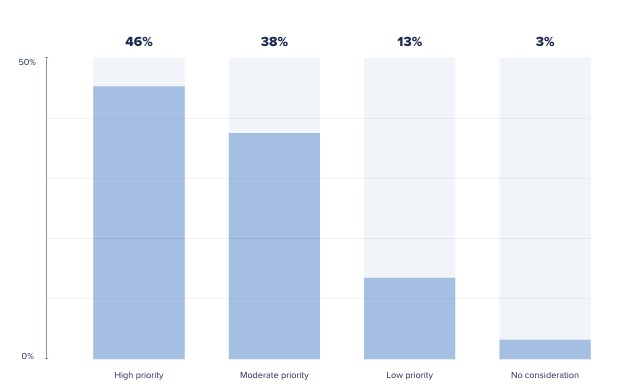
It stands to reason, then, that improving the agent experience is a big focus area for business leaders right now. A shade under one in two brands (46%) declare this is a high priority while 38% say it represents a medium imperative – just 13% consider this a low priority and only 3% are not currently engaged with this domain in any capacity. This broad scale movement to enhance the lives of frontline employees reflects the growing awakening at the top level that a high-performing, elite contact centre can provide a decisive edge in the marketplace.
Certainly, those falling into the latter two buckets – the 16% – are undoubtedly taking a gamble. For there are huge risks here. A failure to invest in agents – their institutional knowledge, their working processes, their performance, their career pathways – is to invite high levels of attrition that will inevitably lead to disjointed customer experiences, lower customer satisfaction, and an increase in operational costs. The financial impact of continuously recruiting and training agents adds up quickly and that’s not to mention the productivity losses incurred during their
onboarding. On the flip side to that, longer-tenured agents amass heightened expertise and a sharper understanding of their respective businesses – the mechanics of which they can transfer into higher-quality customer service. In short, there are compounding negative and positive effects at play.
Figure 2: Do you currently measure levels of agent satisfaction?
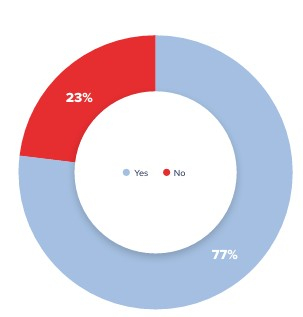
Of course, the journey to bettering the agent experience starts with measuring levels of agent
satisfaction. By embracing this metric and committing to an ongoing process of discovery and improvement, brands can ensure they’re always in tune with agent sentiment and thus able to respond to any concerns or organisational missteps in real-time. Seventy-seven percent are already doing this. Twenty-three percent are not – leaving them with an exciting opportunity to unlock fresh business insights that can potentially strengthen their contact centre operation.
A proven method to capture agent satisfaction is through surveys that explore factors influencing engagement and possible root causes of dissatisfaction. Some key areas to assess may include overall satisfaction, perceived workload, areas for growth and development, recognition and awards, team dynamics and leadership, training and support, technology and tools. Together, these elements will paint a comprehensive, data-fuelled picture of agent perceptions and attitudes – insights that businesses can leverage to pinpoint employees at risk of attrition and then launch tailored retention programmes that look to address underlying issues.
One of the strongest levers when it comes to moving the needle on agent satisfaction is performance metrics – and specifically how agents are set up to meet them. And this is a particularly nuanced subject within the contact centre.
Indeed, the executives leading and steering customer service face constant challenges here. It’s an incredibly difficult task to find the sweet spot between maintaining operational efficiency and delivering on customer demands – they often pull in opposing directions. It’s also true that different stakeholder groups define success through different lenses: The C-suite need a strategic set of high-level KPIs that serve to reinforce the business case for exceptional customer experience, whereas frontline managers require sightlines into more granular, functional metrics so as to efficiently manage and triage service response in real time.
Put simply, no single metric can tell the whole story of agent performance and the broader impact of the contact centre – it takes a combination.
By far the most common unit of measurement to assess agent performance today is average handle time (AHT) – a massive 70% of brands doing so. Behind that, 52% are tuning into first-call resolution (FCR) rates, 45% are looking at average speed of answer, and, similarly, 41% are paying attention to net promoter score (NPS). Wrap-up time, abandonment rate, and average talk time (ATT) are also all on the reporting card at more than a quarter of brands, and smaller pockets are following missed and declined calls and transfer rate.
At the heart of any discussion on performance metrics, two key elements must always take centre stage. Primarily, they must tightly align with the customer experience vision (however that varies from brand to brand), and second, agents must have a sense that they are directly under control. When agents are held accountable to performance expectations they feel they cannot attain or influence, morale will quickly diminish, disengagement will set in, and overall satisfaction will plummet. It’s all too easy for business leaders to get distracted by the noise and misconceptions around KPIs in the contact centre – it’s critical that they stay focused, and they map them to the right places.
Figure 3: What metrics do you use to measure agent performance?
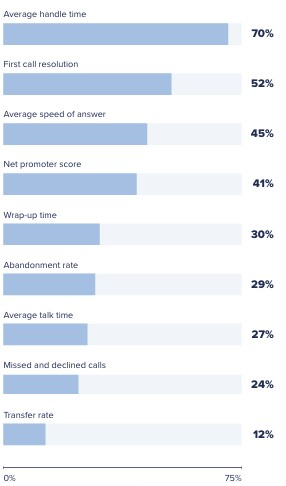
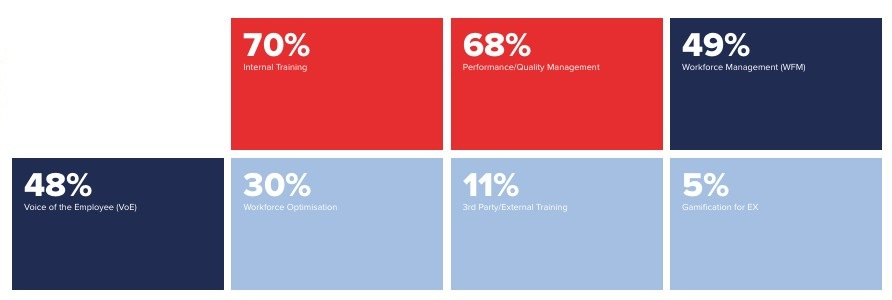
Figure 4: What processes/ solutions do you have in place to enhance the experience of your contact centre agents?
As businesses chart what success looks like for their agents, a parallel step they must take is to invest in the proper future-ready processes and requisite backend solutions that provide the base for achieving their goals.
Unsurprisingly, internal training (70%) and performance and quality management (68%) are the two most popular tactics businesses are tapping into right now. One-to-one personalised training from team leaders has always underpinned skill-building in the contact centre and that won’t be changing any time soon. Especially now, with digitisation transforming the role of agents, customer care leaders must be relentless in their efforts to consistently reskill and upskill their talent on the ground. Well-designed, tailored coaching programmes can equip agents with targeted business knowledge and fresh problem-solving techniques that can directly impact those top-of-mind metrics: AHT and FCR.
Beyond this, workforce management (WFM) solutions and voice of the employee (VoE) programmes are also trending highly: Deployed by 49% and 48% of brands, respectively.
Again, this makes sense when looking at the KPIs and the paradigms brands are spotlighting. WFM solutions can help to reduce measures like average speed of answer, abandonment rates, and transfer rates by ensuring the right number of agents are available at the right times. Streamlining and automating practices related to coordinating and organising the workforce essentially affords agents the gift of time – time to concentrate on dealing with calls and other high-value tasks without becoming overburdened.
And in terms of VoE – this perfectly aligns with the bigger picture here and ties back to measuring agent satisfaction. The benefits of VoE feedback loops are multi-fold. For employees, they offer a space to express their opinions and influence workplace decisions, while for employers, they are a forum to address operational gaps and build better relationships. Win-win.
Focused Investment: Empowering Contact Centre Talent for Long-Term Success
The perception of customer care talent has come a long way in the recent past. Historically viewed as budget-friendly staff, easy to replace and relatively low-skilled, frontline employees had precious few opportunities to develop their capabilities – and themselves. Their roles were regarded as dispensable.
The result? A revolving door of agents and a never-ending recruitment treadmill. There’s been a sea change, though.
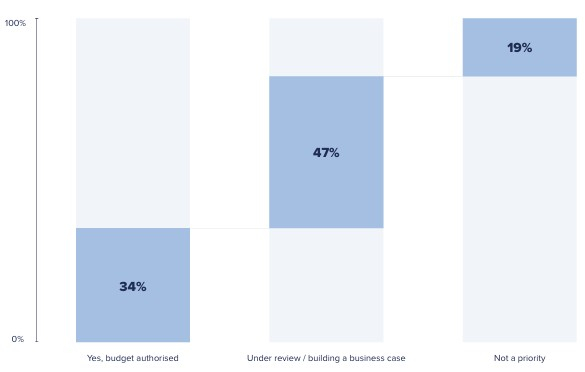
Figure 5: To what extent does your business plan to invest in skills-building programmes for your contact centre agents over the next 12 months?
With the concept of customer care growing more sophisticated and call volumes surging (and requiring greater emotional intelligence to handle), this workforce now requires more intentional and strategic prioritisation – and, crucially, boardroom-backed investment. Contact centre talent – these vital intermediaries in the value chain – often serve as a key touchpoint in the customer experience; key influencers in shaping brand reputation in moments that truly matter. These realities call for a bold new approach to agent management and agent nurturing.
For contact centre leaders, knowing where to begin with this isn’t easy – but be proactive about improving agent retention and satisfaction they must.
A powerful starting point is to build and foster enduring skills – skills that will serve agents throughout their careers, enabling them to thrive both now and in future roles, and in the face of new challenges. One in three brands (34%) are looking to augment their skills-building programmes over the next 12 months, with 47% likewise interested in doing so and currently building a business case to solicit executive sponsorship. A fraction under one in five brands (19%) don’t see this area as an immediate priority, potentially risking gaps in their agent preparedness and service quality.
Digging deeper into the specific areas of skill-based investment, a clear pattern emerges: That of a strong emphasis on cultivating human-centric, social intelligence over boosting technical prowess.
The top area of attention, cited by 69% of brands, is building soft communication skills – empathy, active listening, conflict resolution, patience: The tenets of effective human connection that can really sow the seeds of brand trust and brand loyalty. Knowledge development (52%) and managing complex customer issues (51%) take spots two and three respectively on the priority list.
This reflects a growing imperative in the contact centre: As automation and artificial intelligence permeate the customer experience ecosystem in myriad ways, brands – and the agents themselves – must hone and polish the social and emotional instincts that are beyond even the most advanced machines. When consumers reach out to the contact centre, they seek more than just answers – they seek understanding and a personal touch: They should be greeted with a uniquely human experience.
Naturally, the utilisation of AI technologies is also a prominent focus area. They are a staple in executive boardroom discussions these days given their transformative potential and contact centre leaders are actively pursuing their integration. There are great challenges around implementation, however, and there is a fine line they must walk between automation and personalisation – they must ensure AI enhances rather detracts from the customer experience.
Figure 6: In what specific areas will you invest in to improve the agent experience over the next 12 months?
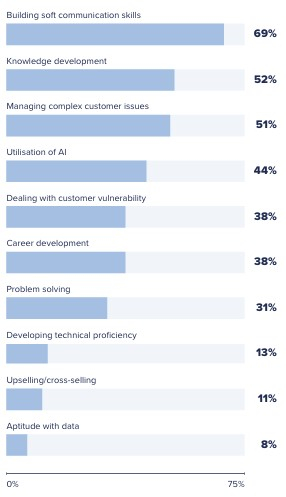
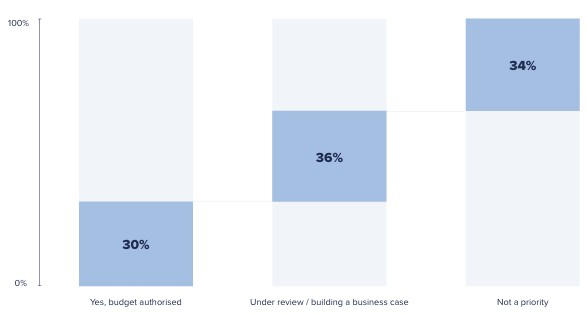
Figure 7: To what extent does your business plan to invest in health and wellness initiatives for your contact centre agents over the next 12 months?
Away from training and development, there’s also a strong focus on health and wellness in the contact centre. And understandably so: Customer service positions commonly lead to high stress and burnout rates. Agents are under huge pressure.
Two in three brands (66%) are either rolling out wellbeing initiatives or making the case for resource allocation – leaving 34% with no plans at present. The fact that the investment scales tip the way they do suggests agent well-being is gaining traction. But what’s behind the trend? In short, the rise of digitalisation.
As more brands move to strengthen their digital capabilities, the very nature of the contact centre is undergoing a fundamental transformation. Routine transactional issues are evermore seamlessly and effortlessly managed through digital self-service solutions (think: chatbots, customer portals, customer communities, in-app engagement), meaning the more complex, more highly charged, more emotional customer inquiries are left for agents to pick up. There’s hardly any downtime on the frontlines now. And, of course, this takes its toll.
A cornerstone of health and wellness in the contact centre is building a feeling of psychological safety among agents. Business leaders must take a proactive role in this by cultivating a working environment that is at once supportive, inclusive, transparent, and open. By doing so, they can ensure the longevity of their well-being capital, creating a safe and empowering space for their frontline workers to learn, grow, and thrive.
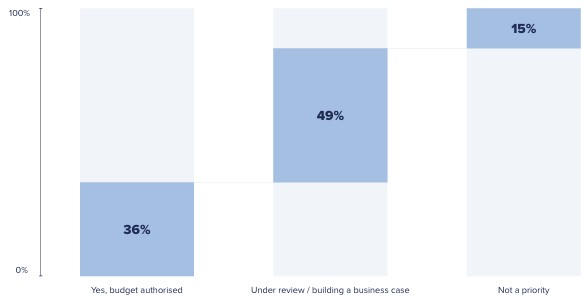
Figure 8: To what extent does your business plan to invest in creating career pathways for your contact centre agents over the next 12 months?
Another area on the radar for brands is developing more formal opportunities for career progression. For too long, business heads have overlooked their agent workforce as a source of future leadership – inherently to their own detriment. Purposeful investment in the frontline experience and a strategic utilisation of professional pathways can simultaneously reduce those costly attrition rates and build a conveyor belt of next-generation talent that steadily feeds into the wider organisation.
A significant 36% of brands already have approved budget in this realm, with 49% a step back in the planning phase. Certainly, putting resources behind career progression is a really sound move. There are few, if any, other internal-facing stakeholders that understand customers better than those working in the contact centre – they garner unique insight into common pain points, emerging trends, and operational inefficiencies. They have firsthand knowledge of what customers truly want. In other words, cultivating leadership from the frontline embeds and permeates deep customer knowledge throughout the enterprise.
The benefits don’t stop there either. A clear, well-defined career ladder for agents can help attract top talent into the business – the super agents who are at such a premium. It can also help foster an environment of growth and motivation and opportunity where employees feel valued. In essence, it contributes to building a thriving, customer-centric culture.
AI-Powered Customer Care: Where We Stand and What’s Next
Artificial intelligence has disrupted the customer service landscape in a way we have never seen previously. A surge in generative AI advancements over the past two years has unleashed a relentless wave of innovation that is unlocking new frontiers in automation, to a point whereby large language models (LLMs) are now powering vital support functions that were once completely out of reach for algorithms heretofore. And yet. Brands remain cautious and are approaching AI adoption carefully and deliberately.
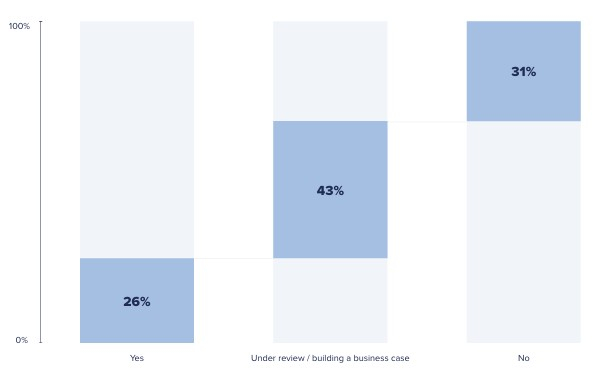
Figure 9: Have you already invested in agent-facing AI technology?
To be sure, there’s little doubt now that the future state of the contact centre – and by extension the future agent experience – will be considerably shaped, nay revolutionised, by AI technologies. What’s less clear is the timelines on which brands are operating. One of the biggest questions facing contact centre leaders is how to infuse them into their internal infrastructure without alienating the very people they are designed to support. Suffice it to say: This is a matter of great sensitivity – for agents need to feel that AI is an ally: An enabler of human expertise rather than a replacement for it.
A sizable portion of brands have yet to fully embrace agent-facing AI technology. Currently, 26% have already integrated AI into their agent workflows and 43% are reviewing its promise and building a business case. This illustrates that while there is indeed widespread recognition of the immense possibilities that AI holds, the majority of contact centres remain in testing or pilot phases – evaluating the technology’s real-world operational impact. That leaves 31% that have not yet taken steps toward AI implementation on the frontlines. Could that be an issue for them down the line? It remains to be seen. One fact is clear, though: To overcome the rising tide of service complexity and higher call volumes, AI-powered tools are a necessity at the point of customer contact. Brands can’t afford to sit and watch any longer.
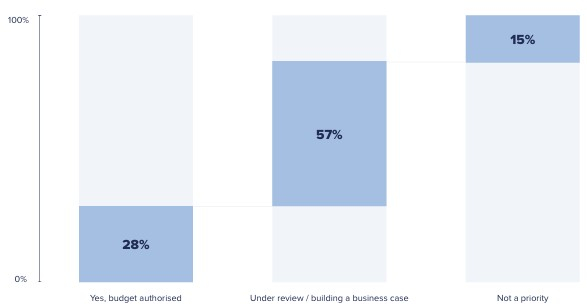
Figure 10: To what extent does your business plan to invest in new agent-facing AI technology over the next 12 months?
Looking ahead, it’s evident that more contact centre leaders are responding to this need for action: There is a strong pipeline for future investment.
Over the next year, 85% of brands have new agent-facing AI solutions in their sights. Of this group, 28% have secured budget approval, while 57% are still in the review phase. Only 15% don’t see such technology as a priority this year.
The high percentage of businesses in the mid-spectrum is testament to how hard it is to get AI projects off the ground. It’s a labyrinthine process. Especially in large enterprises. In the first instance, there’s the cacophony of industry noise that boardrooms must cut through before they can determine where exactly to execute. The last 24 months have brought so much change, with new AI technology providers hitting the figurative shelves almost constantly – it’s been a period in which businesses have been busy analysing, sometimes experimenting with, different vendors often without a guiding framework. Now, there is a sense of recalibration – contact centre leaders are beginning to home in on the use cases that will deliver value for their brand. But shifting that mindset – from exploration to implementation – takes time.
Then, there’s the unknown. So few companies have truly scaled AI, and with best practices still emerging, most are left pondering where to start and how to proceed. This uncertainty leads to hesitation, with businesses delaying adoption in search of clearer guidelines. Those who take the leap now have a chance to define the standards that others will eventually follow.
Figure 11: What new areas of agent-facing AI technology are a priority for your contact centre over the next 12 months?
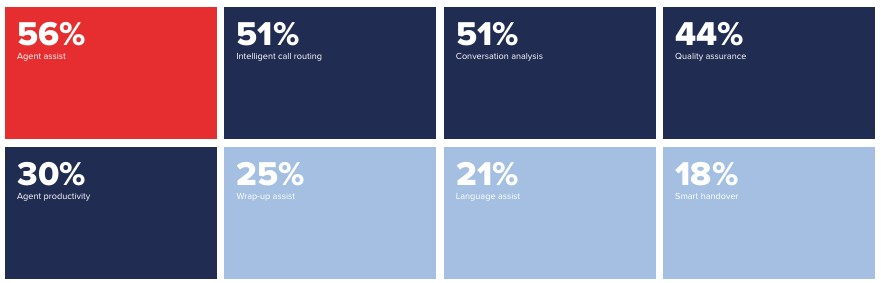
Among those actively investing in agent-facing AI or planning to, agent assist technology stands out as the most common domain of interest: 56% of brands are directing resources toward this area. Indeed, this will soon become table stakes in the contact centre: Gone are the days when a mild understanding of individual customers was seen as a competitive edge – now that is the bare minimum. Consumers expect brands – and therefore agents – to be well-versed in their previous interactions, previous purchases, and service preferences. Behind the scenes agent assist solutions can help meet that mandate – they can listen in to conversations and equip agents with relevant, hyper-personalised insights in real time. The customer’s past actions, the customer’s sentiment, recommended next steps: This technology can arm agents with key information in the moment, affording them more space to think creatively, engage authentically, and principally build a relationship with the customer.
Meanwhile, 51% of brands have a focus on both conversation analysis and intelligent call routing, with 44% also focusing on quality assurance platforms and 30% turning to productivity-enhancing technology for agents. Wrap-up assist, language assist, and smart handover tools are also garnering significant interest.
This even distribution of investment reflects just how many AI use cases there are in the contact centre today – it is a forum so ripe for AI-powered disruption. Collectively, these innovations will come to define the next generation of customer care, where AI and human expertise merge seamlessly together to deliver smarter and more effective service at every touchpoint.
There’s still a way to go to reach that future state, though: Numerous roadblocks lie in the way of this vision. AI, and particularly generative AI, applications still have limitations and some cloudy aspects.
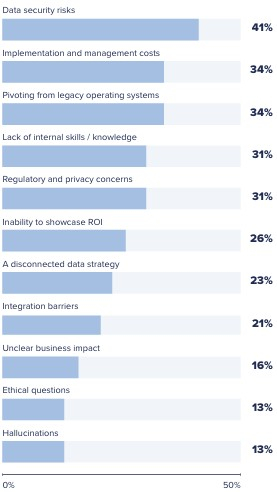
The chief concern among business leaders right now is data security risks: Flagged by 41%. It’s easy to see why this is the case – AI systems process and draw on vast volumes of customer and operational data and brands need to uphold rigorous data protection standards to comply with various regulatory requirements. Many in the industry are still racing to understand the intricacies involved here and that goes some way to explaining why most brands are still in the early stages of adoption. Any data breaches can have far-reaching financial and reputational consequences.
To mitigate some of these risks, one practice brands can adhere to is establishing a proprietary knowledge and data portal that can then be employed as a controlled, closed-loop training platform for AI applications. Contact centre leaders can build an extensive library of customer queries, customer profiles, product or service information, frequently asked questions, knowledge base articles, and more, all to ensure every output is at once accurate and reliable.
Moving beyond data security, implementation and management costs (34%) and pivoting from legacy operating systems (34%) are jointly the second biggest inhibitors to adoption. Certainly, the latter will weigh heavily on more brands than others – large enterprises, most notably, can find it challenging to decouple from aging systems that were built often decades ago. Businesses also report that a lack of internal skills and knowledge (31%), regulatory and privacy concerns (31%), an inability to showcase ROI (26%), and a disconnected data strategy (23%) are further complicating AI fulfilment.
All said, the most effective safeguard against these risks is to keep AI in check. Ensuring a human agent remains in the loop – verifying AI-generated insights before they reach customers – is critical. AI should assist decisions, not dictate them.
Figure 12: What are your biggest inhibitors around investing in agent-facing AI technology?
Wrapping Up: Empowered Agents, Exceptional CX
Life in the contact centre is in the midst of a seismic shift.
The role of frontline employees is evolving at pace in response to a changing society and technological advancements, and as it does so, this much is certain: Brands that invest in their agents will reap the rewards of stronger customer relationships, operational efficiency, and long-term competitive advantage.
The path forward must be built on two pillars. First, business leaders must embrace a human-centric culture – prioritising agent wellbeing, professional growth, and meaningful engagement to build a contact centre workforce that is resilient and empowered to deliver exceptional experiences. Second, they must harness the power of AI responsibly, ensuring the technology is an instrument of augmentation more than anything else. By working to these principles, brands can promote an environment where human and digital intelligence work in harmony.
Ultimately, the future of customer service is not just about faster resolutions or reduced costs – it’s about crafting a dynamic where agents are valued as the indispensable brand ambassadors they truly are. Those that recognise this will not only transform their contact centres but will redefine customer experience for the digital age.