The State of Customer Management in 2025
Add bookmark

*Please note the 2026 edition is published and available for download here
Setting the Stage
The operational landscape lying before customer management leaders today is among the most testing in recent memory. Indeed, the tides of change across multiple domains within the customer contact ecosystem are so sweeping that many brands, both emerging and established, are facing a transformation imperative – one marked by multifaceted challenges that examine strategic acumen and operational resilience.
Chief among them is navigating the AI paradigm. Business leaders must integrate rapidly advancing AI-driven technologies into customer-centric frameworks and prepare their workforces for a future in which automation will be critical to success. It’s a delicate act that involves balancing the potential for enhanced efficiency and hyper-personalisation with the labyrinthine complexities of ethical AI deployment and data security. At present, many customer management leaders are still figuring out how to walk that fine line – treading cautiously. AI innovations are revolutionising how they can provide customer care and how they create value, rendering the conventional contact centre model obsolete. The problem, though, is that many of the use cases are new and nascent – they can falter and fail to live up to expectations – and disruption comes from having 3 to adopt novel techniques for improving performance alongside continually optimising the enduring traditional support mechanisms.
And that’s just the tip of the metaphorical iceberg.
There are myriad other thorny issues that customer management executives must contend with. Perpetual talent shortages, rising operational costs, high employee attrition rates, and shifting regulatory climates are collectively compounding the pressure, forcing them to continuously fine-tune their resources while driving creativity and progress in concert. And all of this is set against a backdrop of ever-evolving customer demands – small pockets of the most forward-thinking brands are already utilising digital tools at scale successfully and delivering truly relational experiences that are raising the bar for brands everywhere. Success often escalates in this game – experimentation breeds learnings which breed growth – so any laggards would do well to start kicking their digital deployments into gear. Or leave themselves exposed to displacement.
This report paints a picture of the major priorities and major themes that are top of mind for customer management leaders right now. It captures the core tactical, financial, leadership, and partnership pillars that are key to driving customer experience transformations – in 2025 and beyond.
Methodology and Demographics
To build this study, CCW Europe surveyed 100+ thought leaders from the CCW Europe community. All pioneers in their respective fields spanning customer care, support services, customer operations, customer insights, product management, and many more, the respondents collectively came from a range of companies of all sizes plying their trade across all the major industries including financial services, healthcare and pharmaceuticals, hospitality and travel, retail, automotive, telecommunication, energy, and government and NGO services.
This is a snapshot of the respondents’ job titles: Chief Service Quality Officer, Vice President of Support Services, Director of Product Management, Director of Operations, Director of CX, Vice President of Customer Care, CX Transformation Manager, Global CS and Logistics Lead, Head of Omnichannel Management, Director of CX Management, Customer Journey Owner, Global Head of Customer Operations, Customer Experience Transformation Leader, Customer and Employee Advocacy Director, and Chief Commercial Officer.
The New Imperative — Customer Experience as the Cornerstone of Success
Year by year, the importance of meeting customers in their moment, on their terms, grows more acute – more existential. Across sectors, across the B2B-B2C divide, today’s CX trendsetters and trailblazers are doing more than just outpacing their competitors: They’re reshaping the competitive terrain on every level, redefining what it means to lead and setting new standards for connectivity and success. Leaving non-innovators behind.
Figure 1: To what extent does your organisation’s long-term strategic vision prioritise CX transformation as a competitive differentiator?
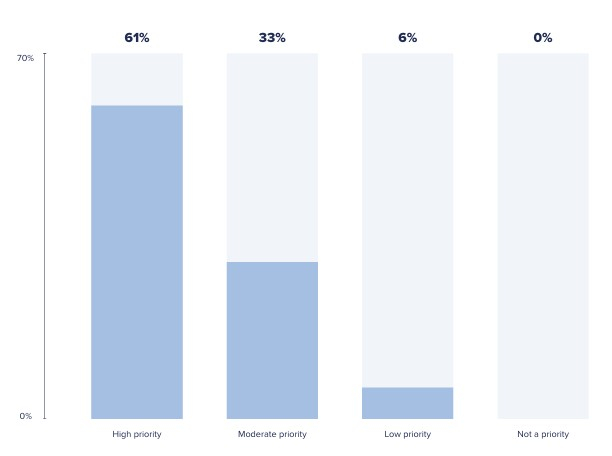
It’s unsurprising, then, that a significant 61% of customer management leaders declare that CX transformation is a high priority strategic focus for their organisations right now, with a further 33% conveying it is a moderate priority. A mere 6% say it has low importance within their enterprise. This overwhelming commitment to experience-driven programmes and roadmaps reflects a broader recognition at boardroom level: CX is no longer just a standalone function or initiative – it’s the cornerstone of sustainable success. On many fronts. By embracing CX as an anchor to their long-term vision, brands can better position themselves to attract and retain customers with greater ease – they can build deeper relationships, enhance customer loyalty, and foster higher-quality advocacy. All of which ultimately drive repeatable growth and profitability.
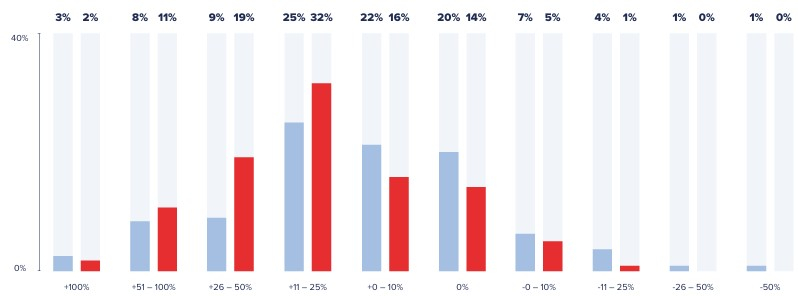
Figure 2: By what percentage do you anticipate your CX budget will change in 2025?
This commitment is not just lip service either.
Business executives are funnelling more financial resources into their CX programmes to help bring their expressions of customer-centricity to life. Back in 2024, 67% of customer management leaders enjoyed a positive injection of cash into their budget, yet this year 80% are anticipating increased levels of monetary backing. And what’s more, drilling down into those numbers, greater proportions of decision-makers are 7 set to benefit from a greater allocation of funds: 11% will receive a 51 to 100% increase in their budgets (compared to 8% in 2024), 19% will pick up a 26 to 50% increase (against 9% in 2024), and 32% expect an 11 to 25% increase (versus 25% last year).
Of course, it follows, too, that all this elevated investment dictates that fewer brands are cutting their CX-focused spending or otherwise keeping it the same (which ultimately equates to less spending power due to inflation). All said, there is an undeniable trend here: Meaningful investment in CX is now an indispensable part of staying competitive. At a time when new technologies are changing the game, it will allow CX teams to start turning their ideas into action, start ramping up their AI explorations, and start manifesting their goals in practice. The months ahead promise to be full of opportunities and new frontiers.
If you're interested specifically in 2025 customer experience trends, you may also find this article on CX Network insightful.
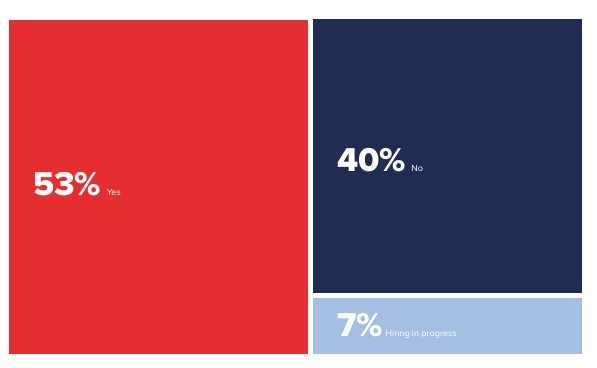
Figure 3: Does your organisation have dedicated leadership (for example, a Chief Customer Experience Officer) responsible for driving CX transformation?
So, what will set the winners apart?
One critical step is establishing a single point of accountability for the CX operating model. The CX ecosystem is so multi-dimensional, so cross-functional, and so intrinsically tied to success that it needs dedicated oversight. Executive leadership teams of yesteryear rarely included a position focused entirely on the customer management component of the business equation, but more and more brands are looking to plug that gap. Suffice it to say, if there is no set governance over all the areas that filter into CX performance, and there is a lack of clarity around who holds responsibility for delivering those seamless, unified journeys that strengthen customer engagement, then the ecosystem will collapse.
A shade more than one in two organisations (53%) already have dedicated leadership responsible for driving CX transformation, and an additional 7% are currently hiring for the role; however, they might label it or frame the purview. That leaves 40% devoid of a plan to integrate a designated CX steward at the top table. Is that a risk? Only time will tell. But in the absence of broad-scale guardianship over CX design principles and CX methodologies, brands leave themselves vulnerable: They risk seeing any CX vision they have fall by the wayside without that centralised orchestration.
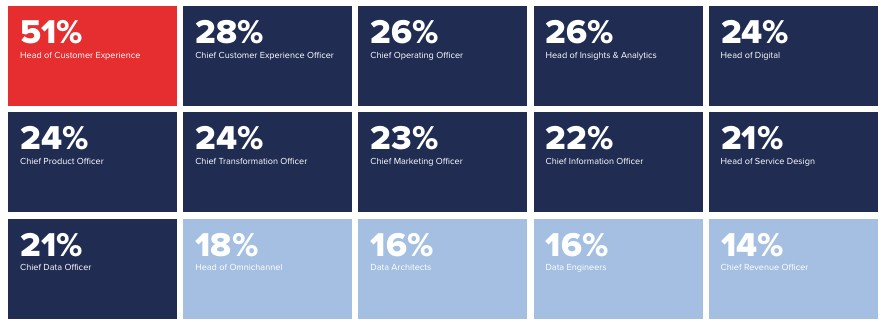
Figure 4: Which other key stakeholders are mission-critical to driving your CX transformation?
And it’s this orchestration element that is key.
Far too frequently, the brands struggling to drive any real impact on their CX transformation journey are those addressing change management and pushing innovation independently – resulting in fragmented digital strategies and siloed investments. The knock-on effect is subpar outcomes and inconsistent customer journeys hindered by a lack of cohesion, disconnected data sources, and compartmentalised decision-making.
Dedicated CX owners can bring together all the disparate pockets of the enterprise that affect customer interactions to shape and architect organisation-wide, end-to-end transformation. The type that really moves the needle. They can embed process consistency between the digital, data, analytics, product, marketing, revenue, and service design functions – unifying competing viewpoints and co-developing a shared CX agenda. A culture in which all these cross-disciplinary teams are working in unison – collectively following the same north star – will naturally fortify the organisation and propel transformational initiatives, unlocking business value at a faster pace.
Figure 5: How aligned are your organisation’s executive leadership and operational teams in driving end-to-end CX transformation initiatives?
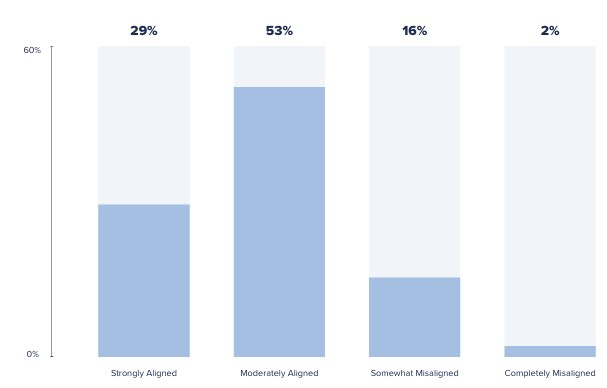
The indications are that most brands have laid the groundwork for seamless collaboration and are poised to take the next steps: Building clear momentum. Three in 10 brands already have strong alignment between their executive leadership and operational teams when it comes to driving holistic CX transformation initiatives, while 53% are a fraction behind in their pursuit with moderate alignment. Only 16% are somewhat misaligned and a minimal 2% are completely misaligned.
In order to drive organisational synergies, and to solidify culture change, a best practice is to ensure the language describing the change is clear and, crucially, real. Senior management teams often obsess over crafting the perfect corporate message, filling it with a collection of artfully sounding aphorisms that attempt to capture everything all at once. That doesn’t work. Nothing generic ever engages. It doesn’t give anything for employees to hang their hat on nor does it give them anything to feed into when they need to make business decisions. The language needs to stir emotions, leave an impression, spark a reaction – it needs to make them sit up, and it needs to give them direction.
Figure 6: To what extent does your contact centre operate in a silo?
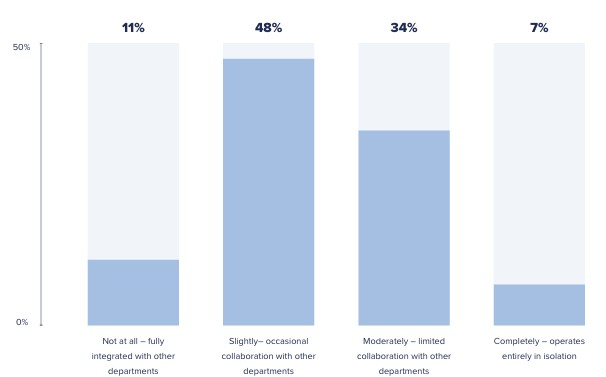
Digging deeper into the alignment panorama, a somewhat similar – albeit less evolved – pattern of development can be observed in the context of the contact centre. Eleven percent of customer management leaders say their contact centre is fully integrated with other departments, and just under one in two (48%) have occasional collaboration with other departments. Farther down the line, 34% only experience limited collaboration and 7% are operating completely in a silo.
Those on the backend of this spectrum are missing a massive trick: On account of the fact that frontline interactions are laced with a veritable goldmine of insights. With appropriate reporting infrastructure and feedback loops in place, the contact centre is perfectly positioned to help power business efficiency – it is the first port of call for customers when there are issues with products and services. If the communication lines to the contact centre are open, then this intelligence can be promptly disseminated through the enterprise and used during transformation discussions to catalyse actionable change.
Case Study — BT
How to Turn Customer Dissatisfaction into Business Opportunities
British multinational telecommunications company BT has mastered the craft of turning contact centre data into valuable insights that fuel strategy modifications all over their larger customer-facing network. The review and response systems they have developed empower the business to get to the heart of customer complaints quickly and apply solutions at their source.
The Road to Personalisation: Overcoming Fragmentation to Achieve Consistent CX
Benchmark-setting customer experience is a perpetual moving target, always trending higher: Today’s best experience is tomorrow’s baseline expectation. That’s a tough mandate for customer management leaders – for it means that staying relevant demands ongoing evolution: They must be constantly embracing innovation and overhauling multiple core competencies at any given time. And they must approach their roles with agility and foresight, maintaining a pulse on the latest trends and new decisive market developments without pause.
Figure 7: In which of the following areas do you plan to invest in to improve CX over the next six to 12 months?
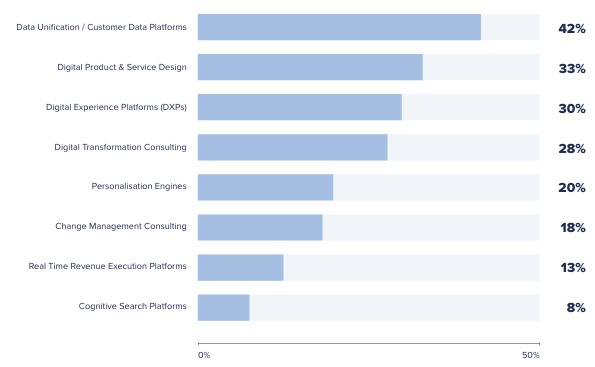
The most common investment domain over the next six to 12 months is data unification or customer data platforms: Just over four in 10 CX decision-makers (42%) are spotlighting this area. Behind that, 33% are looking to improve their digital product and service design, and similarly, 30% are planning to channel money into digital experience platforms. Rounding out the top five priorities, 28% will be tapping into digital transformation consultancy services and 20% are seeking to upgrade their personalisation engines.
Certainly, it makes perfect sense that data-focused technologies are the prime focus right now given how few brands have seemingly mastered the respective arts of creating cohesive customer journeys and building 360-degree views of their customers. Rapid technological advances in these spaces are also driving businesses to repeatedly reinvest and upgrade their stack just to keep pace.
If you'd like more information on how customer management trends have evolved more recently, you may find this article from CX Today useful
Figure 8: How would you rate the consistency of your customer experience across different channels (for example, website, mobile app, contact centre)?
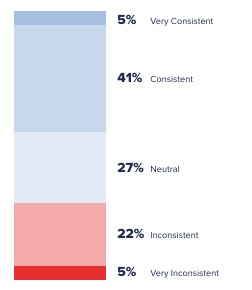
Figure 9: How would you rate the quality of insight you have into your customers?
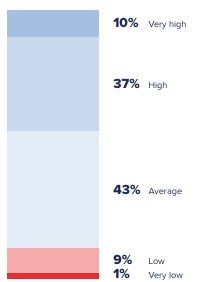
Figure 10: How would you rate your organisation’s ability to translate real-time customer data into actionable insights across multiple touchpoints (for example, in-store, digital, contact centre)?
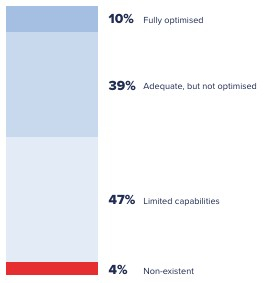
Fewer than half (46%) customer management leaders rate their customer experience across different channels as consistent, with a remarkably low 5% describing it as very consistent. In contrast, 22% assess their holistic customer experience as inconsistent and 5% say it is very inconsistent. Moreover – exacerbating this problem – only 47% collectively evaluate the quality of their customer insights as high or very high. Forty-three percent say they are average. The numbers also tell a strikingly similar story around how effective organisations are at transforming real-time customer data into actionable insights – a mere one in 10 say they have this process completely buttoned up, while 39% convey they have adequate capacity, a touch shy of full optimisation, and 47% say they only have limited capabilities.
There’s tremendous room for improvement across the board, then. And it’s difficult to understate the value of a unified data environment and the role it has in facilitating large-scale transformation.
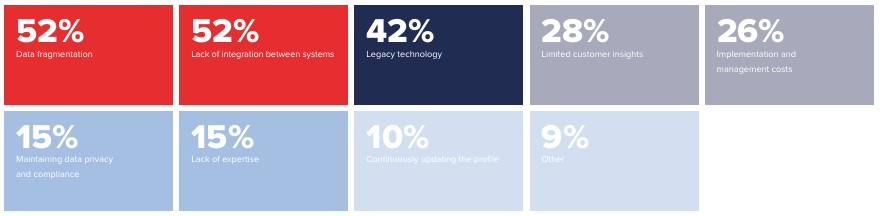
Figure 11: What are the biggest challenges your organisation faces in creating unified customer profiles?
Consumers today like to keep businesses on their toes. Their behaviour shifts like the wind, and they leave data breadcrumbs across a broad spectrum of individual channels (think: digital, website, in-store, mobile apps, customer service, social media, etc.). Against that lay of the land, brands need that solid data foundation in place – they can’t afford to be data illiterate; they can’t afford to build new strategies or campaigns around yesterday’s customer insights. And this isn’t simply about cleaning data streams and removing duplicate or irrelevant observations (although, of course, that is important): This is about robustly synchronising sources through consistent language frameworks, uniform formatting, and shared compliance measures – essentially ensuring straightforward and safeguarded access to the most up-to-date consumer information.
The biggest barriers organisations face in creating unified profiles is fragmentation and a lack of integration between systems – 52% of customer management leaders declaring as such respectively. Other major roadblocks include legacy technology, limited customer insights in the first instance, and implementation and management costs. A lack of internal expertise and maintaining data privacy also earn a mention.
Data unification and customer data platforms would certainly go some way to addressing the two main challenges – those centralised pieces of architecture can consolidate and integrate myriad data types to shed light on customer trends and opportunities. Demographic data, transactional data, behavioural data (such as actions performed on a website, within an app, or through live chat or virtual assistants), permissible third-party data, customer relationship management data, loyalty data, customer service data, social media engagement data – it can all be combined to create dynamic customer profiles that offer more revealing, more exhaustive intelligence and enable brands to unleash personalised activations at scale.
Armed with this technology, CX leaders can say hello to true data-driven storytelling.
EXPERT ANALYSIS
The Art of Building a Robust Customer Data Strategy
Aymen Ismail, the Head of Customer Engagement Solutions at smart Europe, has walked the walk when it comes to building robust data strategies. He has spearheaded numerous initiatives to actively encourage customers to part ways with their data, and he has experience decoupling from legacy systems to ensure data is handled safely and securely.
The AI Leap: Transforming CX for a Multi-Channel World
As organisations lay the groundwork for seamless customer journeys through accessible, structured data, a parallel step they must take is to explore the tools and technologies that can harness said data to create memorable brand experiences and build competitive advantage.
Figure 12: Which technologies will play the most significant role in your company’s CX transformation over the next one to two years?
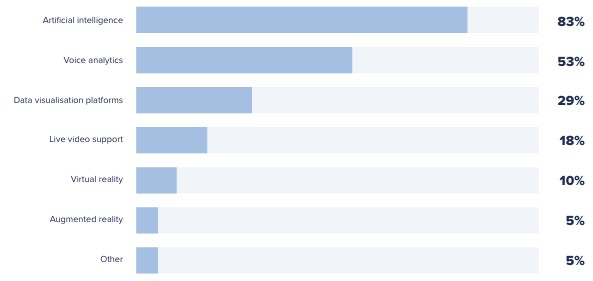
Needless to say, artificial intelligence is garnering the most attention right now. A massive 83% of customer management leaders believe AI will play a significant role in their CX transformation efforts over the next 12 to 24 months. Indeed, there are no signs that the hype and chatter around this technology are slowing down. On the contrary, in fact – as more use cases come to light and more brands share their experiments and success stories, boardrooms at organisations of all stripes are eager to ramp up their own activations. There is a real sense of urgency around AI. A fear of being left behind. A fear of being caught cold.
Beyond this disruptive technology, various other tools and solutions are currently on the radar of customer management leaders, namely voice analytics, data visualisation, and live video support, with small pockets also looking at virtual reality and augmented reality. While this collection may not be as headline-grabbing as AI, they all hold considerable potential to reshape how brands engage with their customers and create innovative interactions throughout different facets of their contact ecosystem.
Of course, every organisation is at varying points in their adoption of AI: Some have already made great strides in applying it to CX, while others are only beginning to test the waters. Identifying the best fit and the best practical application isn’t an easy task.
Figure 13: What level of sophistication has your organisation achieved in leveraging AI to improve CX?
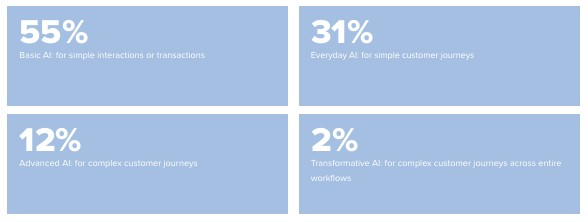
For those who have actually started their journey, 55% have achieved basic maturity – implementing the type of AI that focuses on making simple interactions and transactions smoother and eliminating pain points for both their workforce and customers. The fact that more than half of CX leaders report they are here, on the first rung of the adoption ladder, highlights just how challenging it is to translate pilots and small real-world models into tangible impact on a larger scale. Indeed, while the enthusiasm for AI is booming, a great many unknowns remain, most notably around data privacy. There’s also the workforce training aspect – given that much of this technology is very much still emerging means that the expertise required to manage it effectively may not yet exist within frontline teams. The knock-on effect is a reliance on external third-party vendors or a major commitment to training and development – behind every leap in AI technology, there must be a corresponding human leap to ensure it delivers value. In short, seizing the opportunities out there is a time-intensive process.
There are brands that do have slightly evolved capabilities, though: A fraction under one-third (31%) are leveraging more everyday AI solutions to optimise and enhance different aspects of their customer journeys throughout the funnel (from awareness to loyalty) – indeed, it is here where the seeds of digital transformation really begin to bear meaningful fruit. By using AI in multiple areas, these brands are not just improving isolated moments but also laying the groundwork for heavier integration that can drive more seismic change
Understandably, relatively few brands have realised sophistication beyond this given the complexities involved, yet 12% are already deploying advanced AI solutions for complex customer journeys and 2% are working with transformative AI for complex customer journeys across entire workflows. Reaching these states of AI adoption is no small feat – it refers to a level of integration that provides brands with a distinct competitive edge. It doesn’t just refine existing processes – it redefines them. It can transform core business functions, driving automation, personalisation, and predictive capabilities to unprecedented heights, and chart a bold new course for the future of customer service.
If you'd like to read more about AI in CX, you may also find this article from Call Centre Helper insightful.
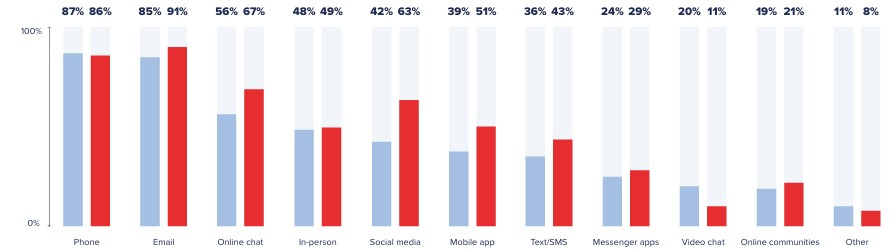
Figure 14: Which channels do you use to engage with customers?
One of the reasons why AI adoption is so important today is the operational bottlenecks brands are encountering with customer engagement. As the need for support across disparate touchpoints grows larger each year, the ability to meet that demand diminishes owing to high staff attrition in the contact centre and fragmented technology systems that spew complexity. Simply put, demand is outstripping capacity.
CX teams are connecting with customers in more places, more often. Across the 10 most common support channels, engagement went down on 21 only two compared to last year: The use of phones (by a trivial one percentage point) and video chat (by nine percentage points). All the rest went up. Most meaningfully, email activity increased by six percentage points, online chat activity increased by 11 percentage points, social media activity increased by a massive 21 percentage points, and mobile app activity increased by 12 percentage points.
All this heightened engagement represents somewhat of a paradox for customer management leaders. A tension. On one hand, delivering service excellence across an expanding range of channels intensifies the challenges they face – back to the point that they must be constantly innovating in multiple areas at once. Yet on the other, they understand that memorable brand experiences – those wow moments – are created through multi-touch, multi-channel connection. The brands that offer those are the ones who will stand out as true innovators.
CASE STUDY
City of Westminster
Implementing Customer-Facing Generative AI Safely and Securely
Westminster City Council, a local government authority in England, is a pioneer in the use of AI – they were among the first 2% of organisations in the UK to release a customer-facing version of this technology. They are brave. They are ambitious. Faced with a raft of challenges around how Westminster communities engaged with their support teams, they turned to AI to optimise the processes.
Learn from Westminster City Council
Wrapping Up: The Time is Now
From fostering seamless collaboration across disconnected departments, to making better use of customer data, to leveraging AI-powered technologies – the pathway to exceptional customer experiences is as vast as it is multi-faceted.
However, amid the trails and the roadblocks lies the potential for significant gains. Never has there been a better time to be a customer management leader – CX is front and centre of boardroom agendas, CX-focused budgets are on the rise, and new technology is raising the ceiling with regards to the possible. The way forward is clear: Bold, customer-centric transformation will define the leading brands of tomorrow. Those that invest in their people, in their processes, and in their systems will not only exceed customer expectations, but set new standards entirely.
The operational landscape is testing. This is the moment to take charge.
About the Author
Simon Hall
Simon Hall is the Industry Analyst at CCW Europe Digital, overseeing research initiatives focused on the evolving practices and emerging trends defining customer management, customer experience, service excellence, digital transformation, and employee engagement. He is also the host of In Conversation with CCW Europe, a podcast that brings together senior thought leaders from across the European customer management landscape.
We've now published the next edition - The State of Customer Management in 2026. Take a look at all the latest developments over the last 12 months. You can also view our latest analyst report, The Path to Omnichannel Customer Engagement.
Stay Ahead of the Game
To keep a pulse on all the latest and greatest technological and operational developments in the industry, the CCW UK Summit offers an unmatched forum.
From groundbreaking customer management case studies to illuminating learning experiences to unparalleled networking opportunities, this event will explore how innovation and transformation can take flight. Connect with peers and explore new technologies that can lead your organisation into the future. Inspiration takes shape here.
- Date: 11 – 13 May, 2026
- Location: Novotel London West, UK